About tiemannite
Who runs it
Kevin Tieman. I work in network operations, and tiemannite is the network I run in my own time. Every choice in it is mine, from the filters to the colours on this page.
Logbook
- Full table to bgp.tools, and eight Tor relays in Hengelo on addresses from the /48.
- RPKI validation on the router itself. Invalid routes no longer get in.
- First sessions up: transit from bgp.rodeo and peering at ENS-IX. The /48 is visible worldwide.
- AS218369 and 2001:67c:2888::/48 registered with the RIPE NCC.
The name
Tiemannite is a mineral, mercury selenide (HgSe), first described in 1855 from the Harz mountains in Germany. It is named after a man called Tiemann; the reference books disagree on which one. My surname is Tieman, so the choice made itself.
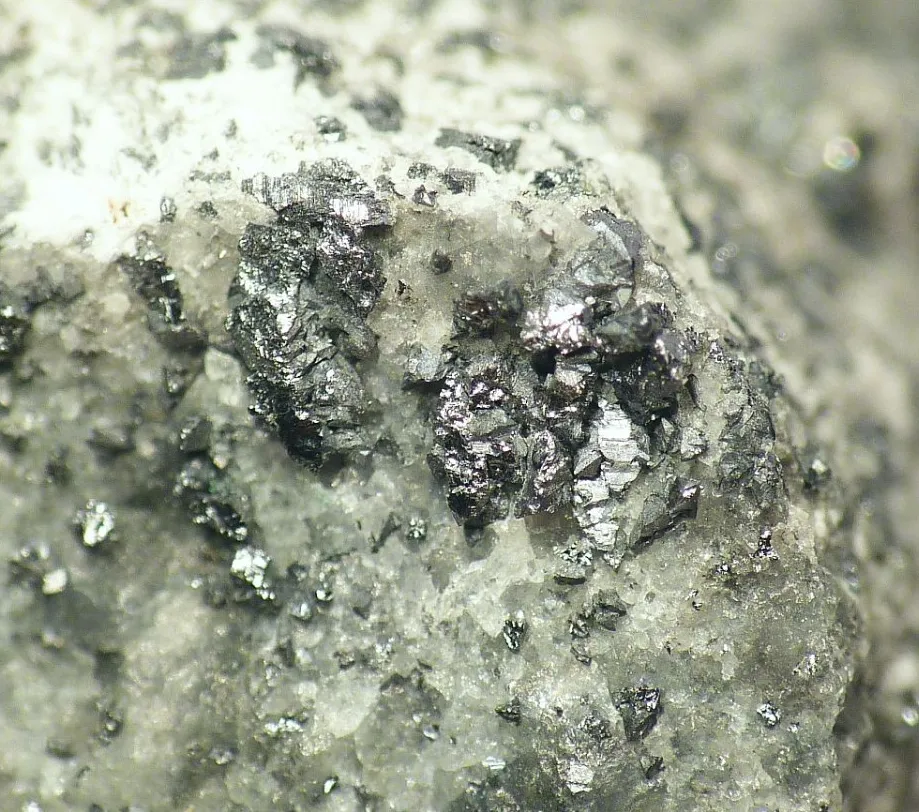
Photo: Leon Hupperichs, via Wikimedia Commons (CC BY-SA 3.0)

The crystal
The logo is a tiemannite crystal as the handbooks describe it: a tetrahedron with its corners cut off. The large faces shine and carry fine stripes along one edge, the small corner faces are dull. The shape is computed from those planes.
The colours are the mineral's
Streak
#0d0e11Nearly black: the colour of the powder when you scratch tiemannite across unglazed porcelain. The background of the dark theme.
Polished section
#9194a0Computed from the reflectance tiemannite gives under a microscope, 34.5% at 400 nm down to 28.2% at 700 nm, lit by daylight (D65). It reflects slightly more blue than red, hence the cool grey.
Sheen
#e5e7f0The bright faces of the crystal: the same measured colour at full brightness. Used for the text on this site.
Lead grey
#413c38The stone in your hand: steel grey to brownish lead grey.
Tarnish
Selenides tarnish. A thin film on the surface turns the light straw, rose and blue, the way heated steel does. You can see it on the crystals in the photo above.
Red selenium
#e76250One of the forms of the element selenium. I use it for the selenium atoms and for things that are down.
The real thing
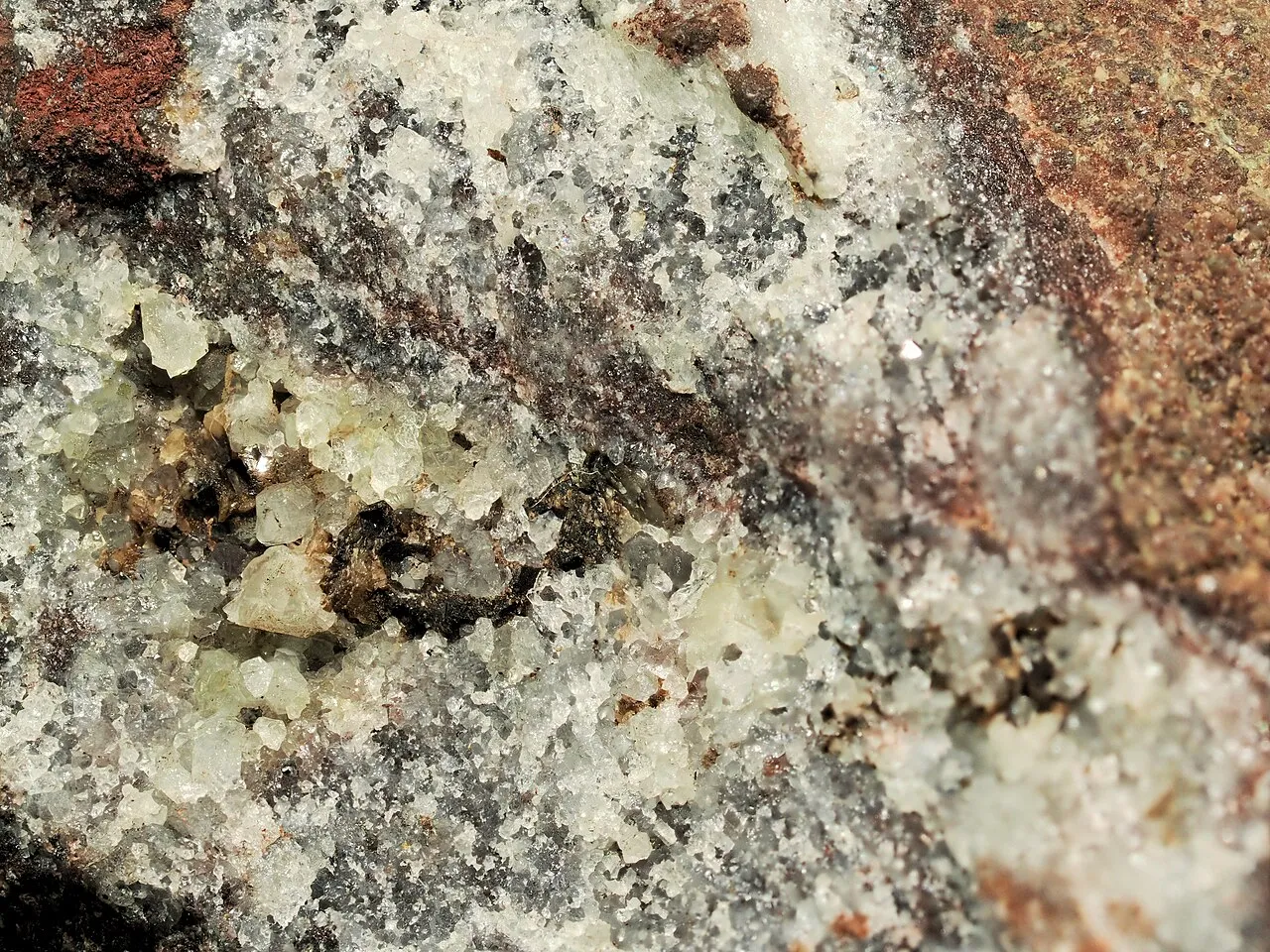
This is where it was first described, in 1855: the Charlotte mine in Clausthal, in the Harz. The grey grains between the quartz are tiemannite. The piece on the homepage is a model I made in Blender, after the shapes in the handbooks and photos like these.

Sources
Crystal data, reflectance and localities: Handbook of Mineralogy, Mineral Data Publishing (2001-2005), after Criddle and Stanley (1993). Colour conversion with the CIE 1931 observer.